Creative Problem Solving with Gamification Techniques (Design Thinking) Training Course
Design Thinking is a user-centric approach to solving complex problems using creativity and innovation.
This instructor-led, live training (online or onsite) is aimed at beginner-level to intermediate-level participants who wish to solve everyday workplace challenges through gamification techniques.
By the end of this training, participants will be able to:
- Understand the principles of Design Thinking and its application to problem-solving.
- Incorporate gamification techniques to foster engagement and innovation.
- Develop creative and practical solutions to common workplace issues.
- Collaborate effectively across teams to implement problem-solving strategies.
- Apply iterative approaches to refine solutions through feedback and experimentation.
Format of the Course
- Interactive lecture and discussion.
- Lots of exercises and practice.
- Hands-on implementation in a live-lab environment.
Course Customization Options
- To request a customized training for this course, please contact us to arrange.
Course Outline
Introduction to Design Thinking
- Overview of Design Thinking methodology
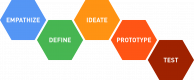
- Key stages: Empathize, Define, Ideate, Prototype, and Test
- Understanding the relevance to administrative and operational challenges
Gamification Fundamentals
- Introduction to gamification and its principles
- Gamification vs game design: Key differences
- Exploring tools and techniques for gamifying problem-solving
Empathy and Problem Definition
- Identifying stakeholder needs and pain points
- Using gamified exercises to gather insights
- Formulating clear and actionable problem statements
Idea Generation and Gamification
- Brainstorming techniques for innovative solutions
- Using gamification to unlock creativity
- Collaborative ideation through team challenges
Prototyping and Testing
- Building low-fidelity prototypes for workplace challenges
- Gamified testing scenarios to evaluate solutions
- Iterative refinement based on feedback
Implementation Strategies
- Planning and executing solutions in real-world contexts
- Overcoming resistance to change through engagement
- Measuring the impact of implemented solutions
Gamification Showcase
- Presenting solutions through gamified storytelling
- Peer feedback and collaborative improvement
- Best practices for sustaining a gamified approach
Summary and Next Steps
Requirements
- Basic familiarity with workplace challenges and scenarios
- Open-mindedness to collaborative problem-solving techniques
Audience
- Administrative staff
- Operational staff
- Team leaders and managers
Need help picking the right course?
southafrica@nobleprog.co.za or +27 (0)10 005 5793
Creative Problem Solving with Gamification Techniques (Design Thinking) Training Course - Enquiry
Related Courses
Design Thinking: Empathize with Internal Clients
7 HoursDesign Thinking is a human-centered approach to problem-solving that leverages empathy, problem definition, ideation, prototyping, and testing. This course variant places significant emphasis on the Empathize phase, concentrating on linking previously identified pain points to the genuine needs of internal clients, while utilizing dynamic, collaborative exercises to convert insights into actionable results.
This instructor-led, live training (available online or onsite) is designed for beginner to intermediate-level teams and leaders who aim to enhance their empathy capabilities, strengthen relationships with internal clients, and transform pain points into meaningful opportunities for improvement.
Upon completion of this training, participants will be able to:
- Utilize empathy-based techniques to identify and validate client needs.
- Convert mapped pain points into clear, actionable requirements.
- Participate in dynamic role plays and simulations to practice client-centered conversations.
- Collaboratively redefine problem statements from the client’s viewpoint.
Course Format
- Interactive lectures and guided discussions.
- Engaging, hands-on role plays and empathy exercises.
- Group workshops focused on collaborative problem reframing.
Customization Options
- To request a customized version tailored to a specific internal process (e.g., procurement or equipment provisioning), please contact us to arrange.
Design Thinking: Empathize & Define for Internal Clients
7 HoursDesign Thinking is a human-centered methodology for solving problems through empathy, definition, ideation, prototyping and testing. Focusing on the first two stages — Empathize and Define — helps teams better understand internal clients and define the right problems to solve.
This instructor-led, live training (online or onsite) is aimed at beginner-level to intermediate-level teams and leaders who wish to strengthen their connection with internal clients, reduce resistance to change, and improve operational efficiency through practical, collaborative methods.
By the end of this training, participants will be able to:
- Use active listening and interviewing techniques to gather meaningful insights about internal clients.
- Create empathy maps and capture user needs and pain points.
- Differentiate real root problems from perceived issues using tools like the 5 Whys and problem trees.
- Draft clear, actionable problem statements (POVs) that guide solution work.
Format of the Course
- Interactive lecture and discussion.
- Practical, hands-on exercises and role-plays.
- Group workshops and plenary feedback sessions.
Course Customization Options
- To request a customized version tailored to a specific internal process (e.g., procurement or equipment provisioning), please contact us to arrange.
Design Thinking Workshop for Software Developers
14 HoursIn this instructor-led, live workshop training in Nigeria (online or onsite), participants will learn how to apply the five stages of Design Thinking to better understand the problems experienced by end-users of a product or service, then develop the best approach for resolving them.
By the end of this training, participants will be able to:
- Use creative strategies to match customers' needs with technologically feasible solutions.
- Formulate a strategy to increase customer value and enhance product and service offerings.
Design Thinking: Innovation Methodologies
24 HoursThis instructor-led, live training in Nigeria (online or onsite) is aimed at beginner-level to intermediate-level professionals who wish to understand and apply Design Thinking methodologies to drive innovation and improve business solutions.
By the end of this training, participants will be able to:
- Understand the core principles of Design Thinking and its role in innovation.
- Apply the five phases of Design Thinking to problem-solving.
- Utilize ideation techniques and tools to foster creativity.
- Implement Design Thinking strategies to improve processes and enhance efficiency.
Innovative Leadership through Design Thinking
14 HoursThis instructor-led, live training in Nigeria (online or onsite) is designed for beginner-level leaders and HR professionals who want to learn and apply Design Thinking methodologies to foster innovation, enhance problem-solving skills, and effectively engage teams.
By the end of this training, participants will be able to:
- Equip participants with tools and methodologies to foster innovation and team engagement.
- Develop skills in empathy mapping, ideation, and prototyping for solving complex challenges.
- Apply Design Thinking principles to leadership and HR scenarios.
- Promote a culture of innovation within tech teams.
Design Thinking: Innovation & Creative Problem Solving
4 HoursOverview:
The Design Thinking (DT) process comprises five distinct stages: empathize, define the problem, ideate, prototype, and test.
In today's increasingly complex world, we encounter challenges that demand specialized approaches. Design Thinking serves as a powerful tool for navigating these complexities. By mastering design thinking, you can effectively manage difficult problems, communicate more clearly, persuade more efficiently, improve business outcomes, and enhance both organizational and personal performance.
- How DT works: Learn from people and problems, identify patterns, design a model (accounting for model drift), test the model, evaluate it, and re-engineer as necessary.
- The relationship between DT, innovation, and entrepreneurship.
- DT methods and tools: Personas, stakeholder maps, customer journey maps, service blueprints, and business model innovation.
- Application of DT: Fostering a design mindset, driving disruptive innovation, adopting an iterative approach, using agile estimation techniques, applying critical thinking, problem-solving, teamwork, leadership readiness, communication skills, technology savvy, forward thinking, intercultural and ethical competency, emotional intelligence, self-awareness, negotiating skills, and conflict resolution.
Objectives:
- To understand the fundamentals and nuances of DT
- To explore key concepts, factors, theories, types, and models in DT
- To experiment, experience, and practice DT
Delivery:
This is a one-day (4 hours) training course consisting of:
- lectures (40% - presentation of theories, concepts, models, and interactions),
- group exercises (30% - group dynamics, games, group discussion, and mock-conflict resolution exercises),
- individual activities (15% - writing, designing and peer discussion)
- and others (15% - videos, reading).
Note: Due to the nature of this course, there is a minimum group size of 3
Design Thinking - Disrupt the Patterns
14 HoursDesign Thinking is a globally recognised methodology for creating innovative services, processes, and products.
At the heart of Design Thinking is the human element. The essence of the method lies in properly defining the problem and focusing on the real needs of the end-user. Recognising this key difference helps mitigate the risk of failure.
The primary objective of the training is to understand the practical application of the method in daily work.
Professional PCB Design Workflow with Altium Designer (MR)
20 HoursThis instructor-led live training (available online or onsite) targets beginner to intermediate PCB designers and electronics engineers who wish to develop a complete and controlled PCB design workflow using Altium Designer.
Participants will work on one connected project, progressing from project setup and component libraries through schematic capture, PCB layout, verification, manufacturing outputs, and controlled production release.
By the end of this training, participants will be able to:
-
Create and manage structured Altium Designer PCB projects.
-
Build and validate schematic designs and component libraries.
-
Configure PCB rules, routing, DRC, and manufacturing constraints.
-
Generate and verify fabrication, assembly, and mechanical outputs.
-
Apply practical high-speed design constraints.
-
Manage engineering changes and controlled re-releases.