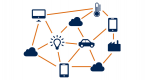
Course Outline
Module 1: Introduction, Basics and Case Studies from Power Utility Companies
- Fundamentals of all technology stacks in IIoT.
- IoT adaptation rate in the Power Utility Market and how they are aligning their future business models and operations around IoT.
- Broad Scale Application Areas.
- Smart Meter, Smart Car, Smart Grid — brief definitions, adoption, and challenges.
- Business rule generation for IoT.
- 3-layered architecture of Big Data — Physical (Sensors), Communication, and Data Intelligence.
- Evolving standards and platform players like Azure, AWS, and Google — brief introductions, what they offer, and what they don't.
Module 2: Sensors, Hardware and Sensor Networks
- Basic function and architecture of a sensor — Sensor body, mechanism, calibration, maintenance, cost and pricing structure, legacy and modern sensor networks. All basics about sensors.
- Development of sensor electronics — IoT vs. legacy, and open source vs. traditional PCB design styles.
- Development of sensor communication protocols — history to modern days. Legacy protocols like Modbus, relay, HART to modern-day Zigbee, Zwave, X10, Bluetooth, ANT, 6LoPAN, WiFi-x, NB-IoT, SignalFx, LORA.
- Powering options for sensors — Battery, solar, mobile, and PoE.
- Energy harvesting solutions for wearables.
- SoC (Sensors on Chips) and MEMS-based sensors.
- Matching sampling rate with application — why it matters in business.
- What is a sensor network? What is an ad-hoc network?
- Wireless vs. Wireline networks.
- Autopairing and reconnection.
- Which applications to use and where.
- Mathematical exercises to determine which network to pick and where.
Module 3: Key Security and Risk Concerns in IoT
- Firmware patching risk — the soft underbelly of IoT.
- Detailed review of security of IoT communication protocols — Transport layers (NB-IoT, 4G, 5G, LORA, Zigbee etc.) and Application Layers — MQTT, Web Socket etc.
- Vulnerability of API endpoints — list of all possible APIs in IoT architecture.
- Vulnerability of gateway devices and services.
- Vulnerability of connected sensors — gateway communication.
- Vulnerability of gateway-server communication.
- Vulnerability of cloud database services in IoT.
- Vulnerability of application layers.
- Vulnerability of gateway management services — local and cloud-based.
- Risk of log management in edge and non-edge architecture.
Module 4: Machine learning, AI, Analytics for intelligent IoT
- What is the return on investment for Intelligent IoT?
- In Utility — Power Quality, Energy management, Other analytic as service (AAS).
- Introduction to analytic stacks in IoT — Feature extraction, Signal Processing, Machine learning.
- Introduction to digital signal processing.
- Fundamentals of analytic stacks in IoT applications.
- Learning classification techniques.
- Bayesian Prediction — preparing training files.
- Support Vector Machine.
- Image and video analytics for IoT.
- Fraud and alert analytics through IoT.
- Real Time Analytics / Stream Analytics.
- Scalability issues of IoT and machine learning.
- FOG computing.
- Edge architecture.
Module 5: Smart Metering - Standards, Security and Future
- Smart Metering.
- Open Smart Grid Protocols (OSGP).
- ANSI C2.18 Protocols.
- NIST Standard for HAN (Home Area Network).
- Home Plug Powerline Alliance.
- Security Standard for Smart Meter — IEC 62056.
- Security vulnerability of smart metering — case studies.
Module 6: Cloud Platform for IoT / Iaas / Paas / Saas for IoT
- Iaas: Infrastructure as a service — evolving models.
- Mechanism of security breaches in the IOT layer for Iaas.
- Middleware for Iaas business implementation in healthcare, home automation, and farming.
- Iaas case study for vehicular information for auto-insurance and agriculture.
- Paas: Platform as a service in IoT. Case studies of some IoT middleware.
- Saas: Software/System as service for IoT business models.
- Updates and patches via web-OTA mechanism.
- Microsoft IoT Central as an example of a PaaS platform.
- Google IoT, AWS IoT PaaS platforms.
Module 7: Future of Smart Grid and Smart Metering
- EV charging as a service.
- EV as a mobile battery and charger wallet.
- Large battery storage — Hydro Battery, Lithium Battery, and other initiatives.
- Charging and storage as service.
- Grid as a service for P2P energy trading.
- Use of distributed ledger technology in P2P energy trading — Blockchain, HyperLedger, and DAG.
- IOTA/TANGLE in P2P charging.
- IOTA/TANGLE in smart energy and smart contracts.
Module 8: A few common IoT systems for Utility monetization
- Home automation.
- Smart Parking.
- Energy optimization.
- Automotive — OBD / Iaas / Paas for insurance and car parking.
- Mobile parking ticketing system.
- Indoor location tracking.
- Smart lighting for smart cities.
- Smart Waste Disposal system.
- Smart pollution control in cities.
Module 9: Mobile IoT Modem, 4G, 5G, NB-IOT
- 4G IoT standards for IoT: LTE-M applications, NB-IoT, UNB standard for 3GPP, 4G, LTE CAT-1 IoT.
- 5G IoT standard for IoT: LPWA, eMTC, IMT 2020 5G.
- Detailed architecture of IoT Mobile Modems.
- Security vulnerabilities of 4G/5G and radio networks.
- IoT gateways — architecture, classification, and security issues.
Module 10: Managed IoT Service: IoT management layers
- Sensor onboarding.
- Sensor mapping.
- Digital Twin.
- Asset management.
- Managing third-party devices and gateways.
- Managing sensor connectivity and gateway connectivity.
- Managing device and gateway health.
- Managing sensor calibration and QC.
- Managing OTA/Patching on a bulk scale.
- Managing firmware, middleware, and analytic builds in distributed systems.
- Security and risk management.
- API management.
- Log management.
Module 11: Managing Critical Assets
- Review of existing Fiber Optical Networks, SCADA, PLC for Power Plants, Sub-stations, and critical transformers.
- SHM (Structural Health Monitoring) of DAM systems — ICOLD standard for Dam monitoring.
- Upgrading from SCADA to local cloud-based systems (not public cloud).
- Transitioning from SCADA/PLC to intelligent local cloud for more efficient management of Critical Assets.
- Strategy for new policies to adopt smart devices.
Requirements
- Should have basic knowledge of business operations, devices, electronics systems, and data systems.
- Must have a basic understanding of software and systems.
Basic understanding of Statistics (at an Excel level).
Target Audience
- Decision makers, strategists, and policy makers.
- Engineering leaders, lead developers, and security experts.
Breakdown of the Module (Each module is 2 hours; customers can request any number of modules): Total 22 hours, 3 days.
Testimonials (1)
The ability of the trainer to align the course with the requirements of the organization other than just providing the course for the sake of delivering it.