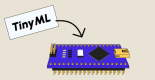
TinyML: Running AI on Ultra-Low-Power Edge Devices Training Course
TinyML is transforming the field of AI by enabling machine learning on microcontrollers and resource-constrained edge devices with ultra-low power consumption.
This instructor-led, live training (available online or onsite) is designed for intermediate-level embedded engineers, IoT developers, and AI researchers looking to apply TinyML techniques to create energy-efficient, AI-powered applications.
Upon completing this training, participants will be able to:
- Grasp the core concepts of TinyML and edge AI.
- Deploy lightweight AI models onto microcontrollers.
- Optimize AI inference to minimize power usage.
- Integrate TinyML into practical IoT applications.
Course Format
- Interactive lectures and discussions.
- Extensive exercises and hands-on practice.
- Practical implementation within a live-lab environment.
Customization Options
- To request a customized version of this course, please reach out to us to make arrangements.
Course Outline
Introduction to TinyML
- What is TinyML?
- Why run AI on microcontrollers?
- Challenges and benefits of TinyML
Setting Up the TinyML Development Environment
- Overview of TinyML toolchains
- Installing TensorFlow Lite for Microcontrollers
- Working with Arduino IDE and Edge Impulse
Building and Deploying TinyML Models
- Training AI models for TinyML
- Converting and compressing AI models for microcontrollers
- Deploying models on low-power hardware
Optimizing TinyML for Energy Efficiency
- Quantization techniques for model compression
- Latency and power consumption considerations
- Balancing performance and energy efficiency
Real-Time Inference on Microcontrollers
- Processing sensor data with TinyML
- Running AI models on Arduino, STM32, and Raspberry Pi Pico
- Optimizing inference for real-time applications
Integrating TinyML with IoT and Edge Applications
- Connecting TinyML with IoT devices
- Wireless communication and data transmission
- Deploying AI-powered IoT solutions
Real-World Applications and Future Trends
- Use cases in healthcare, agriculture, and industrial monitoring
- The future of ultra-low-power AI
- Next steps in TinyML research and deployment
Summary and Next Steps
Requirements
- Understanding of embedded systems and microcontrollers.
- Experience with the fundamentals of AI or machine learning.
- Basic proficiency in C, C++, or Python programming.
Audience
- Embedded engineers.
- IoT developers.
- AI researchers.
Need help picking the right course?
southafrica@nobleprog.co.za or +27 (0)10 005 5793
TinyML: Running AI on Ultra-Low-Power Edge Devices Training Course - Enquiry
Testimonials (1)
That we can cover advance topic and work with real-life example
Ruben Khachaturyan - iris-GmbH infrared & intelligent sensors
Course - Advanced Edge AI Techniques
Related Courses
5G and Edge AI: Enabling Ultra-Low Latency Applications
21 HoursThis instructor-led, live training in Nigeria (online or onsite) is designed for intermediate-level telecom professionals, AI engineers, and IoT specialists eager to discover how 5G networks accelerate Edge AI applications.
Upon completing this training, participants will be able to:
- Grasp the fundamentals of 5G technology and its influence on Edge AI.
- Deploy AI models optimized for low-latency applications within 5G environments.
- Implement real-time decision-making systems leveraging Edge AI and 5G connectivity.
- Optimize AI workloads to ensure efficient performance on edge devices.
6G and the Intelligent Edge
21 Hours6G and the Intelligent Edge is a forward-looking course that explores the integration of 6G wireless technologies with edge computing, IoT ecosystems, and AI-driven data processing to support intelligent, low-latency, and adaptive infrastructures.
This instructor-led, live training (online or onsite) is aimed at intermediate-level IT architects who wish to understand and design next-generation distributed architectures leveraging the synergy of 6G connectivity and intelligent edge systems.
Upon completion of this course, participants will be able to:
- Understand how 6G will transform edge computing and IoT architectures.
- Design distributed systems for ultra-low latency, high bandwidth, and autonomous operations.
- Integrate AI and data analytics at the edge for intelligent decision-making.
- Plan scalable, secure, and resilient 6G-ready edge infrastructures.
- Evaluate business and operational models enabled by 6G-edge convergence.
Format of the Course
- Interactive lectures and discussions.
- Case studies and applied architecture design exercises.
- Hands-on simulation with optional edge or container tools.
Course Customization Options
- To request a customized training for this course, please contact us to arrange.
Advanced Edge AI Techniques
14 HoursThis instructor-led, live training in Nigeria (online or onsite) targets advanced-level AI practitioners, researchers, and developers seeking to master the latest advancements in Edge AI, optimize their AI models for edge deployment, and explore specialized applications across various industries.
By the end of this training, participants will be able to:
- Explore advanced techniques in Edge AI model development and optimization.
- Implement cutting-edge strategies for deploying AI models on edge devices.
- Utilize specialized tools and frameworks for advanced Edge AI applications.
- Optimize performance and efficiency of Edge AI solutions.
- Explore innovative use cases and emerging trends in Edge AI.
- Address advanced ethical and security considerations in Edge AI deployments.
Building AI Solutions on the Edge
14 HoursThis instructor-led, live training in Nigeria (online or onsite) is aimed at intermediate-level developers, data scientists, and tech enthusiasts who wish to gain practical skills in deploying AI models on edge devices for various applications.
By the end of this training, participants will be able to:
- Understand the principles of Edge AI and its benefits.
- Set up and configure the edge computing environment.
- Develop, train, and optimize AI models for edge deployment.
- Implement practical AI solutions on edge devices.
- Evaluate and improve the performance of edge-deployed models.
- Address ethical and security considerations in Edge AI applications.
Building End-to-End TinyML Pipelines
21 HoursTinyML involves the deployment of optimized machine learning models onto edge devices with limited resources.
<\/p>This instructor-led live training session, available both online and onsite, is designed for senior technical professionals seeking to design, optimize, and implement complete TinyML pipelines.
<\/p>Upon completing this training, participants will be able to:
- Gather, prepare, and manage datasets specifically for TinyML applications.
- Train and optimize models to run efficiently on low-power microcontrollers.
- Transform models into lightweight formats compatible with edge devices.
- Deploy, test, and monitor TinyML applications in real-world hardware setups. <\/ul>
- Lectures guided by an instructor, supplemented by technical discussions.
- Practical laboratory sessions and iterative experimentation.
- Hands-on deployment exercises on microcontroller-based platforms. <\/ul>
- For tailored training that incorporates specific toolchains, hardware boards, or internal workflows, please contact us to make arrangements. <\/ul>
Course Format
Course Customization Options
Building Secure and Resilient Edge AI Systems
21 HoursThis instructor-led, live training in Nigeria (online or onsite) is designed for cybersecurity professionals, AI engineers, and IoT developers at an advanced level who aim to implement robust security measures and resilience strategies for Edge AI systems.
Upon completion of this training, participants will be able to:
- Comprehend the security risks and vulnerabilities associated with Edge AI deployments.
- Execute encryption and authentication techniques to safeguard data.
- Design resilient Edge AI architectures capable of withstanding cyber threats.
- Apply secure AI model deployment strategies within edge environments.
Deploying AI on Microcontrollers with TinyML
21 HoursThis instructor-led, live training in Nigeria (online or onsite) is designed for intermediate-level embedded systems engineers and AI developers who want to deploy machine learning models on microcontrollers using TensorFlow Lite and Edge Impulse.
By the end of this training, participants will be able to:
- Grasp the fundamentals of TinyML and its advantages for edge AI applications.
- Configure a development environment suitable for TinyML projects.
- Train, optimize, and deploy AI models on low-power microcontrollers.
- Utilize TensorFlow Lite and Edge Impulse to build real-world TinyML applications.
- Optimize AI models to meet power efficiency and memory constraints.
Optimizing TinyML Models for Performance and Efficiency
21 HoursTinyML involves deploying machine learning models on hardware with severely limited resources.
This instructor-led live training (available online or on-site) targets advanced practitioners looking to optimize TinyML models for low-latency, memory-efficient deployment on embedded devices.
By the end of this training, participants will be able to:
- Utilize quantization, pruning, and compression techniques to minimize model size while maintaining accuracy.
- Benchmark TinyML models to assess latency, memory usage, and energy efficiency.
- Implement optimized inference pipelines on microcontrollers and edge devices.
- Evaluate the trade-offs between performance, accuracy, and hardware limitations.
Course Format
- Instructor-led presentations complemented by technical demonstrations.
- Practical optimization exercises and comparative performance testing.
- Hands-on implementation of TinyML pipelines in a controlled lab environment.
Customization Options
- For training tailored to specific hardware platforms or internal workflows, please contact us to customize the program.
Security and Privacy in TinyML Applications
21 HoursTinyML involves deploying machine learning models on low-power, resource-constrained devices operating at the network edge.
This instructor-led live training (available online or onsite) is designed for advanced-level professionals seeking to secure TinyML pipelines and implement privacy-preserving techniques in edge AI applications.
Upon completing this course, participants will be able to:
- Identify security risks specific to on-device TinyML inference.
- Implement privacy-preserving mechanisms for edge AI deployments.
- Harden TinyML models and embedded systems against adversarial threats.
- Apply best practices for secure data handling in constrained environments.
Format of the Course
- Engaging lectures supported by expert-led discussions.
- Practical exercises emphasizing real-world threat scenarios.
- Hands-on implementation using embedded security and TinyML tooling.
Course Customization Options
- Organizations may request a tailored version of this training to align with their specific security and compliance needs.
Introduction to TinyML
14 HoursThis guided, live training in Nigeria (online or on-site) is designed for beginner-level engineers and data scientists who wish to understand TinyML fundamentals, explore its applications, and deploy AI models on microcontrollers.
By the end of this training, participants will be able to:
- Understand the fundamentals of TinyML and its significance.
- Deploy lightweight AI models on microcontrollers and edge devices.
- Optimize and fine-tune machine learning models for low-power consumption.
- Apply TinyML for real-world applications such as gesture recognition, anomaly detection, and audio processing.
TinyML for Autonomous Systems and Robotics
21 HoursTinyML serves as a framework for deploying machine learning models on low-power microcontrollers and embedded platforms utilized in robotics and autonomous systems.
This instructor-led live training, available either online or onsite, is designed for advanced professionals seeking to integrate perception and decision-making capabilities based on TinyML into autonomous robots, drones, and intelligent control systems.
After completing this course, participants will be capable of:
- Designing optimized TinyML models tailored for robotics applications.
- Implementing on-device perception pipelines to enable real-time autonomy.
- Integrating TinyML into existing robotic control frameworks.
- Deploying and testing lightweight AI models on embedded hardware platforms.
Format of the Course
- Technical lectures combined with interactive discussions.
- Hands-on labs focused on embedded robotics tasks.
- Practical exercises that simulate real-world autonomous workflows.
Course Customization Options
- For organization-specific robotics environments, customization can be arranged upon request.
TinyML in Healthcare: AI on Wearable Devices
21 HoursTinyML involves embedding machine learning capabilities into wearable and medical devices that operate with low power and limited resources.
This instructor-led live training, available either online or onsite, is designed for intermediate-level professionals aiming to implement TinyML solutions for healthcare monitoring and diagnostic purposes.
Upon completion of this training, participants will be able to:
- Design and deploy TinyML models for processing health data in real-time.
- Collect, preprocess, and interpret biosensor data to derive AI-driven insights.
- Optimize models to run efficiently on wearable devices with constrained memory and power.
- Assess the clinical relevance, reliability, and safety of outputs generated by TinyML.
Course Format
- Lectures complemented by live demonstrations and interactive discussions.
- Practical exercises involving wearable device data and TinyML frameworks.
- Guided implementation exercises within a lab environment.
Customization Options
- For specialized training that aligns with specific healthcare devices or regulatory workflows, please reach out to us to tailor the program.
TinyML for IoT Applications
21 HoursThis instructor-led, live training in Nigeria (online or onsite) targets intermediate-level IoT developers, embedded engineers, and AI practitioners who want to implement TinyML for predictive maintenance, anomaly detection, and smart sensor applications.
By the end of this training, participants will be able to:
- Understand the fundamentals of TinyML and its applications in IoT.
- Set up a TinyML development environment for IoT projects.
- Develop and deploy ML models on low-power microcontrollers.
- Implement predictive maintenance and anomaly detection using TinyML.
- Optimize TinyML models for efficient power and memory usage.
TinyML with Raspberry Pi and Arduino
21 HoursTinyML is a machine learning approach optimized for small, resource-constrained devices.
This instructor-led, live training (online or onsite) is aimed at beginner-level to intermediate-level learners who wish to build working TinyML applications using Raspberry Pi, Arduino, and similar microcontrollers.
Upon completing this training, attendees will gain the skills to:
- Collect and prepare data for TinyML projects.
- Train and optimize small machine learning models for microcontroller environments.
- Deploy TinyML models on Raspberry Pi, Arduino, and related boards.
- Develop end-to-end embedded AI prototypes.
Format of the Course
- Instructor-led presentations and guided discussions.
- Practical exercises and hands-on experimentation.
- Live-lab project work on real hardware.
Course Customization Options
- For tailored training aligned with your specific hardware or use case, please contact us to arrange.
TinyML for Smart Agriculture
21 HoursTinyML enables the deployment of machine learning models on low-power, resource-constrained devices in the field.
This instructor-led live training (available online or onsite) is tailored for intermediate-level professionals aiming to apply TinyML techniques to smart agriculture solutions that enhance automation and environmental intelligence.
Upon completing this programme, participants will be able to:
- Build and deploy TinyML models for agricultural sensing applications.
- Integrate edge AI into IoT ecosystems for automated crop monitoring.
- Use specialized tools to train and optimize lightweight models.
- Develop workflows for precision irrigation, pest detection, and environmental analytics.
Course Format
- Guided presentations and applied technical discussion.
- Hands-on practice using real-world datasets and devices.
- Practical experimentation in a supported lab environment.
Course Customization Options
- For tailored training aligned with specific agricultural systems, please contact us to customize the programme.