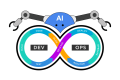
Self-Healing Pipelines: AI for Automated Incident Detection & Recovery Training Course
Self-healing automation involves deploying intelligent systems to identify pipeline failures, pinpoint root causes, and initiate immediate recovery actions.
This instructor-led live session, available online or onsite, is tailored for advanced professionals aiming to embed AI-driven incident detection and automated remediation into their delivery pipelines.
By the end of this course, participants will be equipped to:
- Oversee pipelines using AI-based anomaly detection models.
- Architect automated recovery workflows to address failures instantly.
- Deploy intelligent feedback loops that mitigate recurring issues.
- Boost the overall resilience and reliability of CI/CD systems.
Course Format
- Expert-led presentations featuring real-world case studies.
- Practical exercises centered on pipeline reliability challenges.
- Hands-on creation of automated resolution mechanisms in a lab environment.
Course Customization Options
- For customized content addressing your organization's specific workflows or incident-response requirements, please reach out to us to discuss arrangements.
Course Outline
Foundations of Self-Healing Pipelines
- Core concepts of autonomous recovery
- Typical failure patterns in CI/CD
- AI-driven strategies for pipeline stability
Real-Time Anomaly Detection
- Comprehending pipeline telemetry sources
- Utilizing ML to forecast failures
- Identifying abnormal patterns with AI models
Incident Identification and Root Cause Analysis
- Automatically categorizing incident types
- Correlating logs, traces, and metrics
- Leveraging AI signals to isolate root causes
Auto-Recovery Workflow Design
- Specifying automated remediation actions
- Activating workflows from AI-based alerts
- Integrating runbooks with intelligent decision engines
Building Intelligent Feedback Loops
- Recording historical failure data
- Training models for ongoing improvement
- Facilitating adaptive learning in pipeline behavior
Integrating Self-Healing Capabilities into CI/CD
- Embedding automation across build and deploy stages
- Supporting hybrid and multi-cloud delivery platforms
- Aligning with organizational DevOps governance
Advanced Reliability Patterns
- Designing pipelines with predictive resilience
- Utilizing policy-based decision systems
- Implementing fallback strategies with AI orchestration
End-to-End Self-Healing Pipeline Implementation
- Unifying anomaly detection, RCA, and auto-remediation
- Verifying the resilience of completed workflows
- Safeguarding observability and transparency for engineers
Summary and Next Steps
Requirements
- Familiarity with CI/CD processes
- Practical experience with DevOps or SRE practices
- Understanding of monitoring or observability tools
Target Audience
- SREs
- DevOps leads
- Platform reliability engineers
Need help picking the right course?
southafrica@nobleprog.co.za or +27 (0)10 005 5793
Self-Healing Pipelines: AI for Automated Incident Detection & Recovery Training Course - Enquiry
Related Courses
AI-Driven Deployment Orchestration & Auto-Rollback
14 HoursAI for DevOps: Integrating Intelligence into CI/CD Pipelines
14 HoursAI for Feature Flag & Canary Testing Strategy
14 HoursAI-Driven Observability: From Logs to LLM-Powered Insights
14 HoursThis instructor-led, live training in Nigeria (online or onsite) is aimed at observability and SRE engineers who want to integrate LLMs and AI into their monitoring, alerting, and incident analysis workflows.
AIOps in Action: Incident Prediction and Root Cause Automation
14 HoursAIOps Fundamentals: Monitoring, Correlation, and Intelligent Alerting
14 HoursBuilding an AIOps Pipeline with Open Source Tools
14 HoursAI-Powered Test Generation and Coverage Prediction
14 HoursAI-Powered QA Automation in CI/CD
14 HoursAutonomous Operations with AI Agents
14 HoursThis instructor-led, live training in Nigeria (online or onsite) is designed for SRE and DevOps engineers who wish to design, build, and safely deploy AI agents for autonomous IT operations.
Continuous Compliance with AI: Governance in CI/CD
14 HoursEnterprise AIOps with Splunk, Moogsoft, and Dynatrace
14 HoursImplementing AIOps with Prometheus, Grafana, and ML
14 HoursLLMOps: Production LLM Operations and Governance
14 HoursThis instructor-led, live training in Nigeria (online or onsite) is aimed at ML engineers and platform teams who need to build robust operational pipelines for LLM-powered applications at scale.
ML Security and AI Red Teaming
14 HoursThis instructor-led, live training in Nigeria (online or onsite) is aimed at security and ML engineers who need to identify, test, and defend against attacks on ML models and LLM-powered applications.